Today
Weddings, screens and the internet: meykhana sounds louder than ever.
A genre back in fashion
Today meykhana is everywhere. Almost no Azerbaijani wedding goes without it; it sounds at concerts, in televised duels and in countless clips on the internet. Young performers gather millions of views.
The genre has renewed itself: to the traditional nagara and qaval have been added the electronic beat, synthesizers and studio recording. But the essence remains the same — the sharp improvised word over a rhythm.
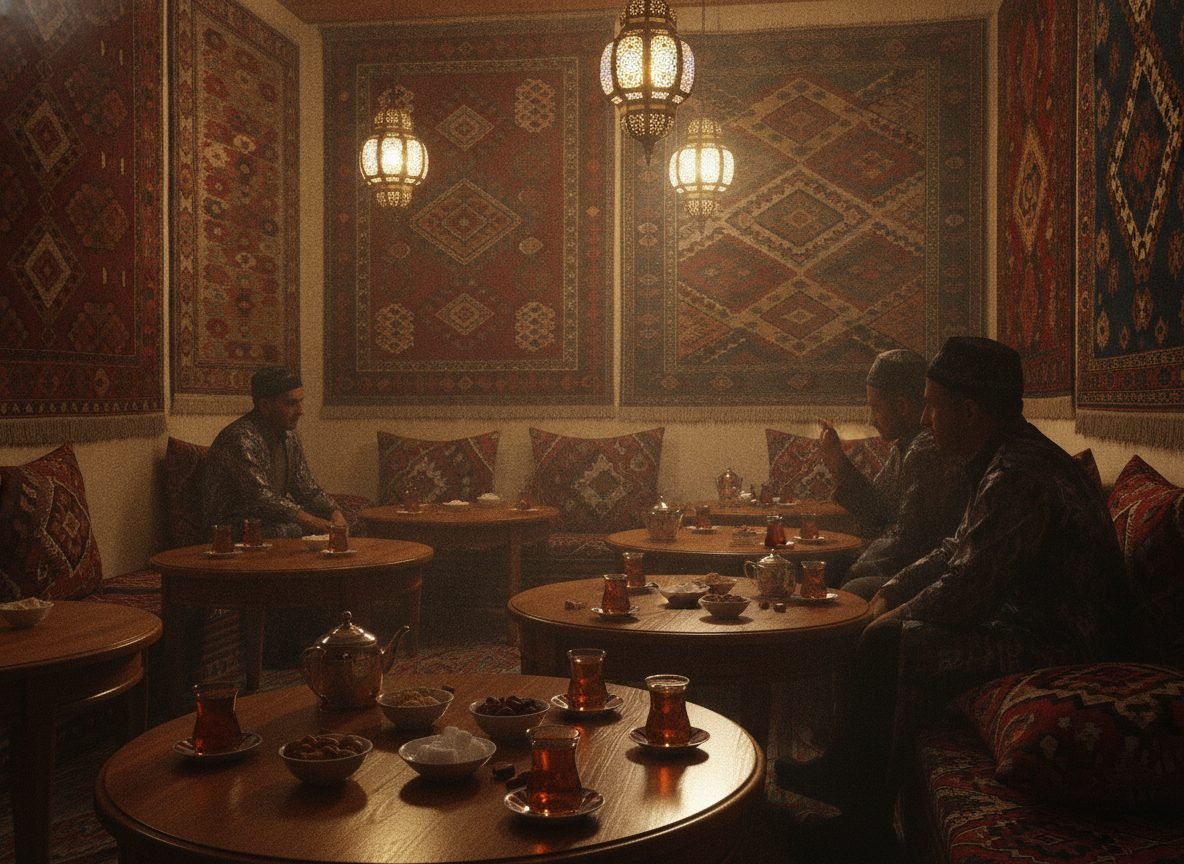
The voice of the feast
Meykhana has long become part of the great Azerbaijani celebration. At weddings the performers fire up the hall, playing on the guests and the events of the evening — lively, kind-hearted and always with humour.
From TV to social media
Shows like 'De, Gəlsin!' turned meykhana into a mass spectacle, and the internet gave it a new life: duels and couplets spread to millions of views, and individual phrases become memes.

The folk ancestor of rap
Meykhana is often called the predecessor and relative of rap: the same rhyme, rhythm and rivalry. It is no accident that Azerbaijani hip-hop grew largely out of meykhana, and many rappers began with it.
The essentials, briefly
An Azerbaijani folk genre — rhythmic, often improvised poetry over a beat, called the 'Azerbaijani rap'.
From Baku and the Absheron Peninsula; the genre took shape before the revolution in a folk, courtyard milieu.
A verbal duel of two or more performers who take turns improvising rhymed couplets, trying to outplay one another.
To the rhythm of percussion — the nagara and the qaval, and nowadays to an electronic beat too; sometimes a cappella.
Yes. In the Soviet era meykhana was officially banned, but it survived semi-legally and returned after 1991.
Yes, it is considered the folk ancestor and relative of rap; Azerbaijani hip-hop grew largely out of meykhana.
As long as there is a feast and a sharp tongue — there will be meykhana.