The Art
Improvisation, rhythm and contest: how meykhana works.
Thought in rhythm
Meykhana is the art of improvisation. A master may write and memorise the text in advance, but the highest skill is to compose on the move, right over the beat, holding the rhyme, the rhythm and the meaning. What matters here is the speed of thought and command of the word.
Four pillars of the genre
Improvisation
The text is born on the move: the poet weaves rhymes off the cuff, answering the theme and the rival.
Deyishme (the duel)
A verbal contest of two or more performers: each picks up the rhyme and tries to outplay the rival.
Rhythm and beat
The word flows over a rhythm: traditional percussion, and nowadays the electronic beat too, set the pulse of the performance.
Theme and satire
Love, daily life, society, politics, humour — meykhana takes any theme and often speaks of it sharply and satirically.
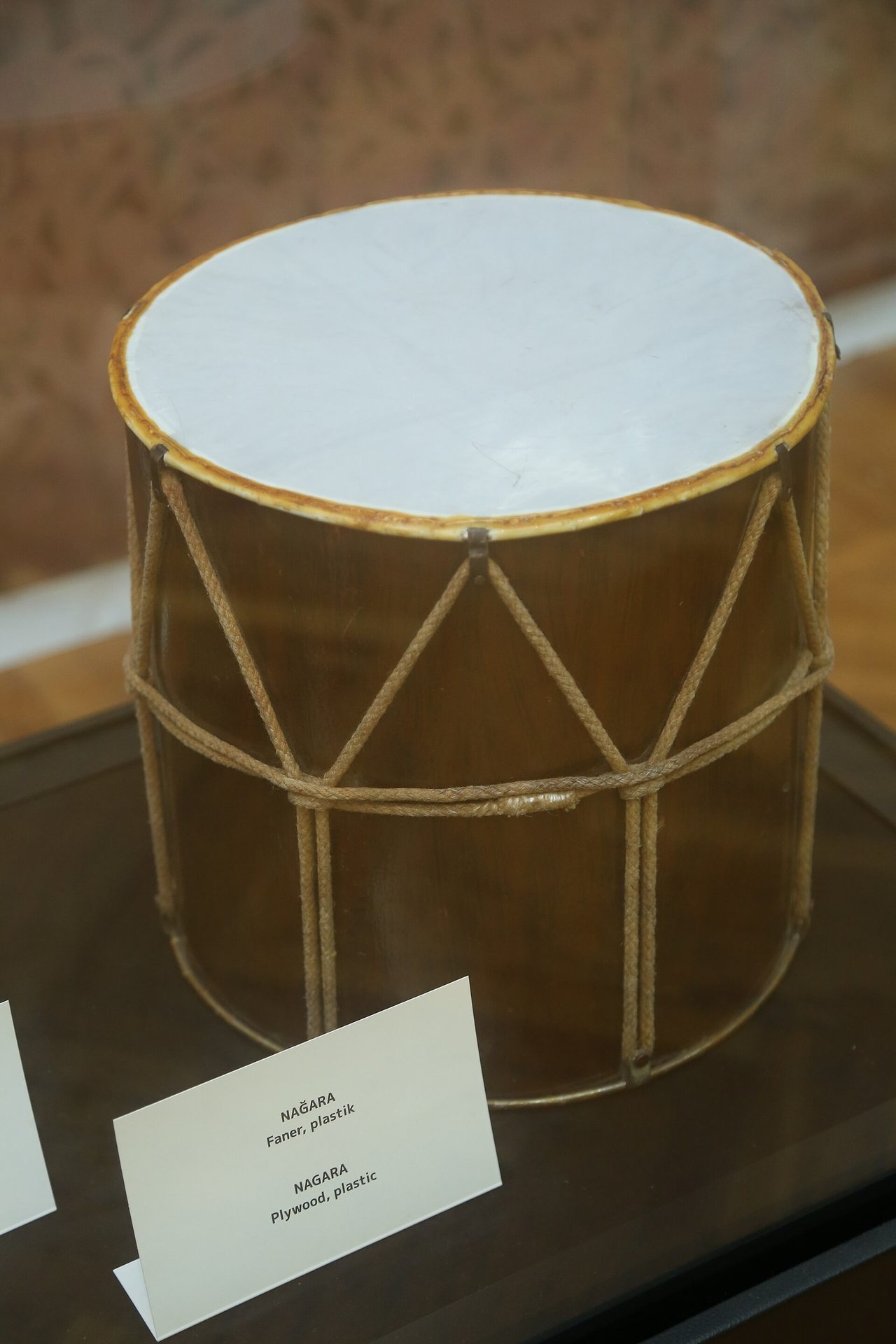
The nagara and the qaval
The heart of meykhana's rhythm is percussion. The nagara (drum) and the qaval (frame drum) set the pulse over which the poet carries his recitative. Today the synthesizer and electronic beat have been added, but it is the living beat that remains the foundation of the genre.
Not only words
Good meykhana is also delivery: clear diction, a trained voice, breath control and an essential melody. The couplets are not merely spoken — they are 'sung' in a chant, in time with the rhythm. Without this even excellent rhymes lose their power.
Give me a rhyme — and I will answer with a rhyme.